A web application firewall protects something your traditional network firewall was never designed to understand in the first place. Your website can have a firewall, HTTPS, secure servers, and still be vulnerable to attacks targeting the application itself, and that’s where a web application firewall (WAF) comes in.
Whereas a traditional network firewall primarily controls network traffic based on factors like IP addresses, ports, and protocols, modern applications communicate through HTTP and HTTPS. What this means is that attackers can hide malicious behaviour inside otherwise normal-looking web requests. A WAF is designed to address this same gap. It not only inspects incoming HTTPS attacks but also acts as an extra layer, which is useful for public-facing websites, e-commerce platforms, SaaS applications, and APIs. Having said that, a WAF cannot fix vulnerable application code; rather, it’s a defensive layer and not a replacement for secure development and other security controls.
So, does your business need one? Well, that depends on what your application exposes and what data it handles, followed by how much risk you can tolerate. This blog explains the same and helps your business decide whether adding a web application firewall makes sense for your website, application, APIs, or hosting environment or not.
How a WAF works: Inspecting and blocking malicious traffic
Before we move on to understand how a WAF works in inspecting and blocking traffic, let’s define it. Primarily, a web application firewall (WAF) is a security tool that monitors, filters, and can block HTTP/HTTPS traffic going to a web application. The primary purpose of a WAF is to protect websites, web applications, and APIs from malicious requests and common application-layer attacks.
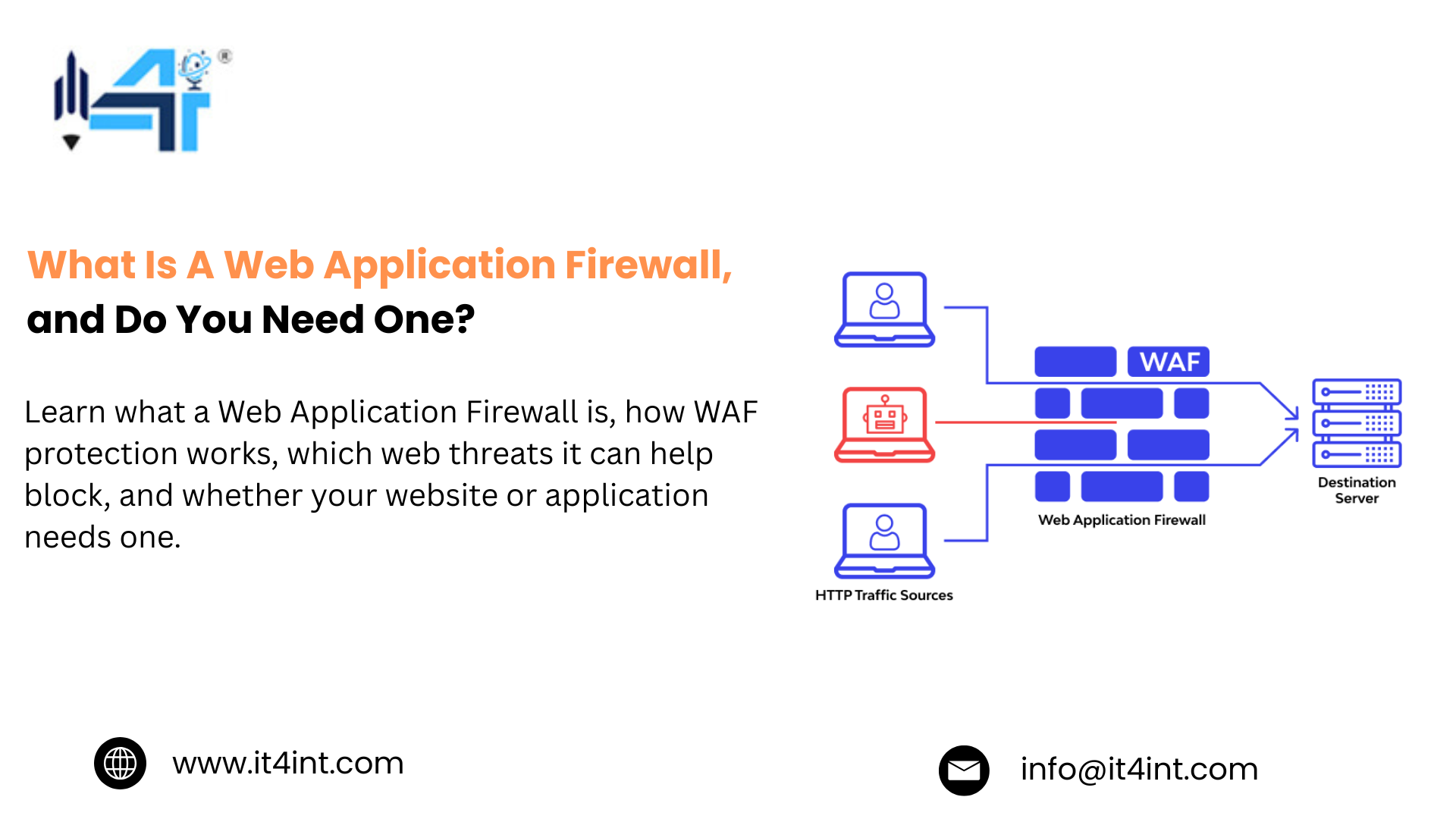
Now, how a WAF works is by sitting between incoming web traffic and your application, inspecting requests before they reach your server. It not only evaluates what the request contains and whether it matches patterns associated with malicious activity.
Here’s a basic WAF traffic flow process:
- Receive
WAF receives the incoming HTTP/HTTPS request
- Inspect
The request is inspected by examining headers, URL, parameters, cookies, and body
- Compare
At this stage, the rules are evaluated, and WAF compares the requests against security policies and attack patterns
- Allow or block
WAF starts taking action and allows, blocks, challenges, or otherwise handles the requests accordingly to policy
- Log
Finally, events are logged where records relevant security activity and the blocked request appears in security logs
What separates a WAF from a basic network firewall is that a WAF inspects the contents of web requests, giving it visibility into application-layer threats. Additionally, the WAF filters potentially malicious web traffic at the application boundary, while the application itself remains responsible for securely handling the requests that are allowed through.
How do WAFs vs. network firewalls protect different layers?
The simplest way to understand the difference is to ask what each security control is trying to protect. The basic distinction is that a network firewall protects the network boundary and infrastructure, while a WAF protects the web application and the requests it receives.
Here’s a detailed breakdown of how WAFs vs. network firewalls protect different layers:
| SECURITY LAYER | NETWORK FIREWALL | WEB APPLICATION FIREWALL |
| Primary focus | Network and transport traffic | Web application traffic |
| What it examines | IP addresses, ports, protocols, connections | HTTP/HTTPS requests, headers, cookies, parameters, request bodies |
| Main purpose | Control which traffic can reach network resources | Identify and block malicious application requests |
| Typical threats | Unauthorized network access, unwanted connections, port-based attacks | SQL injection, XSS, malicious input, application-layer attacks |
| Protection point | Network boundary | Application boundary |
| Relationship | Protects the infrastructure | Adds protection for the application |
One of the strongest approaches is layered protection, where the network firewall controls access to the infrastructure, the WAF adds application-aware inspection, and the application itself must still enforce its own security controls.
Dedicated Server Plans
Power your growing business with IT4INT reliable infrastructure built for demanding workloads, with high performance, advanced security, and flexible configurations tailored to your needs.
Why do modern attacks require a different layer of defence?
The biggest change in modern application security is that attackers don’t always need to look like attackers. They can simply use a normal browser and send requests over HTTPS, interact with public APIs, and target features that genuine users are expected to access.
Here’s why application-layer attacks are different:
- They can use legitimate protocols
- They target application functions
- They can hide inside normal traffic
- They exploit application weaknesses
- They require context
A web application firewall can help by inspecting web requests and applying security policies to application traffic. The goal is to move security controls closer to the point where modern attacks actually occur.
Read More: PCI DSS Hosting Compliance: What Do E-Commerce Sites Need?
The threats a WAF is designed to stop
A web application firewall, unlike a traditional network firewall, is primarily designed to protect web applications from malicious HTTP and HTTPS traffic. Here’s a list of common threats a WAF can help block:
- SQL injection
- Cross-site scripting (XSS)
- Path traversal
- Command injection
- Malicious file inclusion
- HTTP protocol abuse
- Automated or abusive traffic
However, the effectiveness of a WAF depends on its rules, configuration, and the type of attack involved.
Frequently Asked Questions
Conclusion
In conclusion, a web application firewall can add an important layer of protection between your application and the internet. So, if your application is publicly accessible, handles sensitive information, exposes APIs, or supports critical business operations, evaluating WAF protection is worth considering.
CTA
Looking for infrastructure you can build on with confidence? It4int Servers can help you choose infrastructure and hosting solutions that align with your application’s performance, reliability, and security requirements.