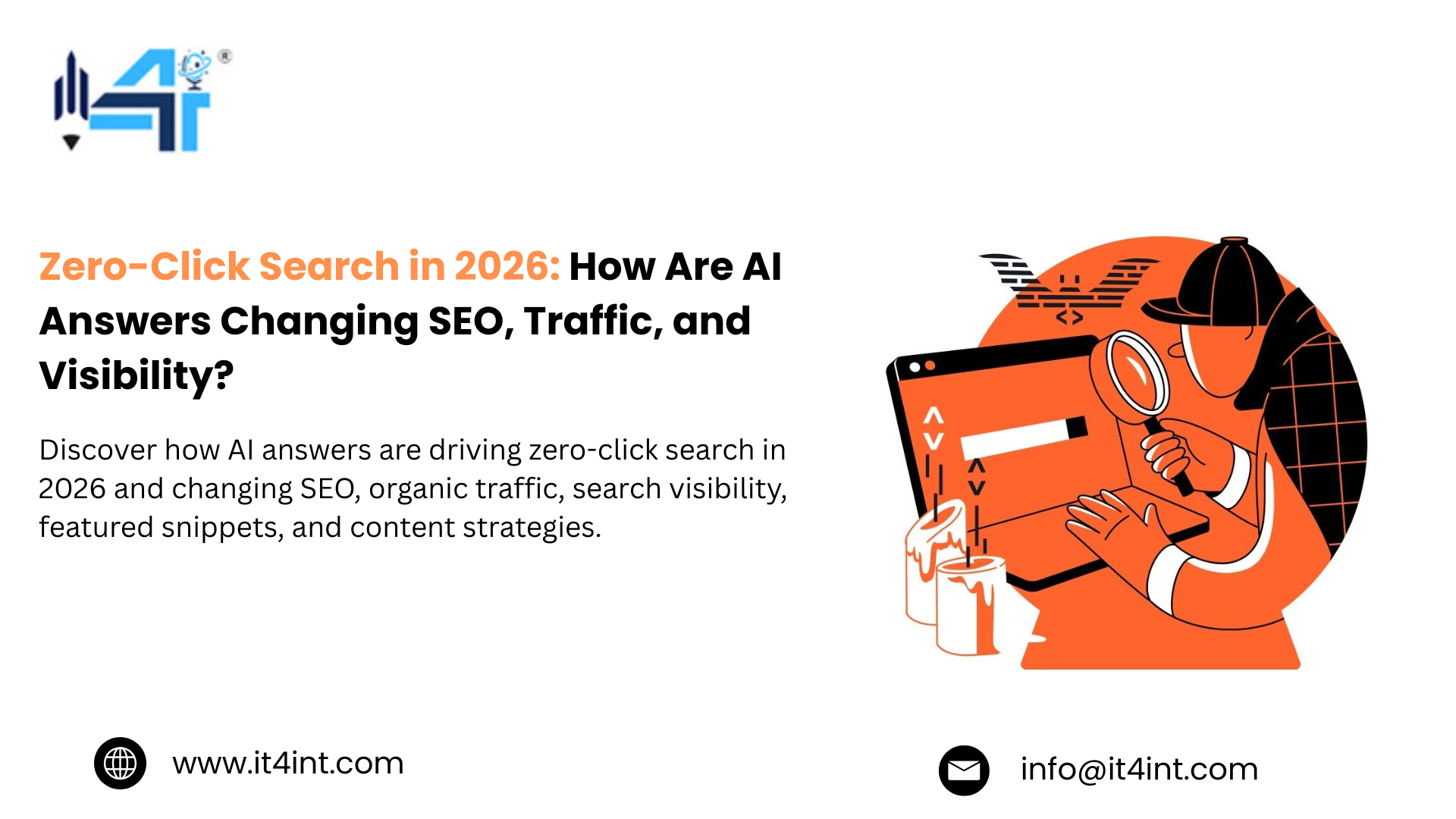
The click is becoming optional, but visibility, citation, authority, and brand recall are becoming more important. A search can be successful even when nobody visits your website, and that is exactly why zero-click search has become an important change in digital visibility.
For businesses, this builds a new tension between AI answers and website traffic. In fact, the latest research from Bain found that about 80% of customers use zero-click results for at least 40% of their searches, while the brands that were cited in AI overviews consistently earned stronger click-through rates than brands that were not cited. So for companies operating in technical markets, the stakes go beyond blog traffic, as a buyer comparing GPU infrastructure, dedicated servers, cloud environments, colocation, or SAP HANA hosting might never begin with a vendor’s homepage.
This holds a major implication for infrastructure brands as which server architecture suits an AI workload? When does a company need dedicated hardware instead of cloud infrastructure? What should a disaster recovery environment look like, and how should an enterprise approach SAP HANA infrastructure questions? It sits at the intersection of IT, finance, cybersecurity, cloud computing, AI, operations, and business strategy.
This blog focuses on zero-click search statistics 2026, what it actually tells us about search behaviour, and how businesses can approach optimizing content for zero-click search without sacrificing the depth, authority, and technical information that helps turn visibility into real business.
What does zero-click search data mean for businesses?
Irrespective of the misconception, a high zero-click search rate does not necessarily mean your SEO is failing. The fact is that users can now get definitions, comparisons, summaries, recommendations, and even answers to complex questions directly from the search results, often before they decide whether a website is worth visiting.
The shift has gone from measuring clicks alone to measuring visibility and influence, as the search result is becoming part of the customer journey. Here’s the most useful way to interpret zero-click search statistics in 2026 by separating searches by intent:
| Search Intent | Example query | What zero-click means |
| Basic information | What is a VPS? | The user might need only a quick answer |
| Comparison | VPS vs dedicated server | The user might continue researching after the summary |
| Commercial research | GPU server for AI workloads | The answer can influence which providers enter the shortlist |
| High purchase intent | Dedicated server pricing | Website visits are still more valuable |
| Brand search | iT4iNT Servers dedicated servers | The user is already looking for a specific provider |
However, businesses simply should not accept fewer clicks; rather, the smarter approach is to distinguish between queries where an answer is enough and queries where depth creates demand. Which means in a zero-click environment, the brands with the strongest long-term visibility will be the ones producing the most useful, credible, technically specific answers across the questions their customers ask.
Dedicated Server Plans
Power your growing business with IT4INT reliable infrastructure built for demanding workloads, with high performance, advanced security, and flexible configurations tailored to your needs.
Can you win searches without getting the click?
Yes, a search can create business value even when it does not generate a website visit, especially in the age of zero-click search; visibility increasingly happens inside the answer itself, where an AI overview features a snippet, knowledge panel, or conversational search experience that can introduce a brand before the user ever opens its website.
So, if your research, documentation, or service expertise helped shape that answer, that becomes the central opportunity behind AI answers vs. website traffic, and the competition is no longer restricted to who gets the blue-link click and also includes who gets mentioned, cited, referenced, or used as a source of understanding.
The few things that you can add to make your searches more useful are:
- Practical examples
- Technical trade-offs
- Architecture considerations
- Comparison tables
- Implementation guidance
- Limitations and risks
- Current industry data
- Original analysis
Additionally, optimizing content for zero-click search is one of the most important principles that can make your content easy to extract.
How can your content win without the click?
There is an important paradox in zero-click search statistics 2026 where optimizing for zero-click visibility should not mean giving up on clicks; rather, the strongest content should do both. The answer-first approach is fundamental to optimizing content for zero-click search because it works for both sides of the search experience.
Moreover, good zero-click content is well-structured content. Here’s a basic content structure that works:
- Use descriptive H2 and H3 headings
- Answer the questions directly at the section beginning
- Keep paragraphs focused on one idea
- Keep important technical information current
- Link related pages where they genuinely help the reader
So if a business consistently publishes accurate and useful resources about dedicated infrastructure, cloud environments, GPU workloads, colocation, enterprise applications, security, backup, and disaster recovery, it creates a broader body of evidence around its expertise.
Read More: Custom Server Hosting: A Guide to Choosing the Right Configuration
Frequently Asked Questions:
Q1. What is a zero-click search?
A zero-click search is a query where the user gets their answer directly on the search results page, through an AI overview, featured snippet, or knowledge panel, without clicking through to any website.
Q2. How common are zero-click searches in 2026?
Most Google searches now end without a click. Depending on the data source, estimates for 2026 range from roughly 58% to 68% of US searches resolving without a visit to any website.
Q3. Does an AI overview always reduce clicks to my website?
Not always, but it significantly lowers the odds. Zero-click rates jump to around 83% when an AI overview appears, compared to about 60% when it doesn’t, though brands cited by name inside the overview can still see a traffic lift.
Conclusion
In conclusion, zero-click search is not the end of SEO, as AI increasingly answers questions before users visit a website; businesses need to compete not only for rankings and clicks but also for citations, mentions, trust, and inclusion in the answers customers see first.
Hence, the future of search will keep changing, and the fundamentals of being useful will not.
CTA
Have an infrastructure question that goes beyond the search result?
Explore It4int Server dedicated servers, VPS, cloud, GPU, colocation, and enterprise infrastructure solutions and find the environment that fits your workload.