Introduction
The digital world is evolving faster than ever, and businesses are generating, processing, and storing more data than traditional computing environments can efficiently manage. From cloud-based applications and online transactions to artificial intelligence, enterprise platforms, and connected devices, modern organizations depend on technology that delivers continuous performance, reliability, and scalability. As these demands increase, distributed computing infrastructure is becoming an essential part of modern IT environments.
Traditional computing models often rely on centralized systems where processing, storage, and application workloads are handled by a limited number of servers. While this approach may work for smaller operations, it can create performance bottlenecks, availability challenges, and scalability limitations as businesses expand. Distributed computing offers a more flexible approach by spreading workloads across multiple interconnected computers, servers, and locations.
Today, distributed systems are no longer just an advanced technology choice for large enterprises. They are becoming a foundation for digital operations across industries, including finance, healthcare, e-commerce, telecommunications, manufacturing, and cloud services.
Organizations increasingly recognize the importance of distributed computing benefits such as fault tolerance, horizontal scaling, improved resource utilization, and business continuity. These capabilities make distributed computing an important component of critical infrastructure IT.
In this article, we explore why distributed computing is becoming critical infrastructure, how it works, its major advantages, and why businesses should consider investing in scalable computing environments with reliable technology partners like IT4INT Server.
What Is Distributed Computing Infrastructure?
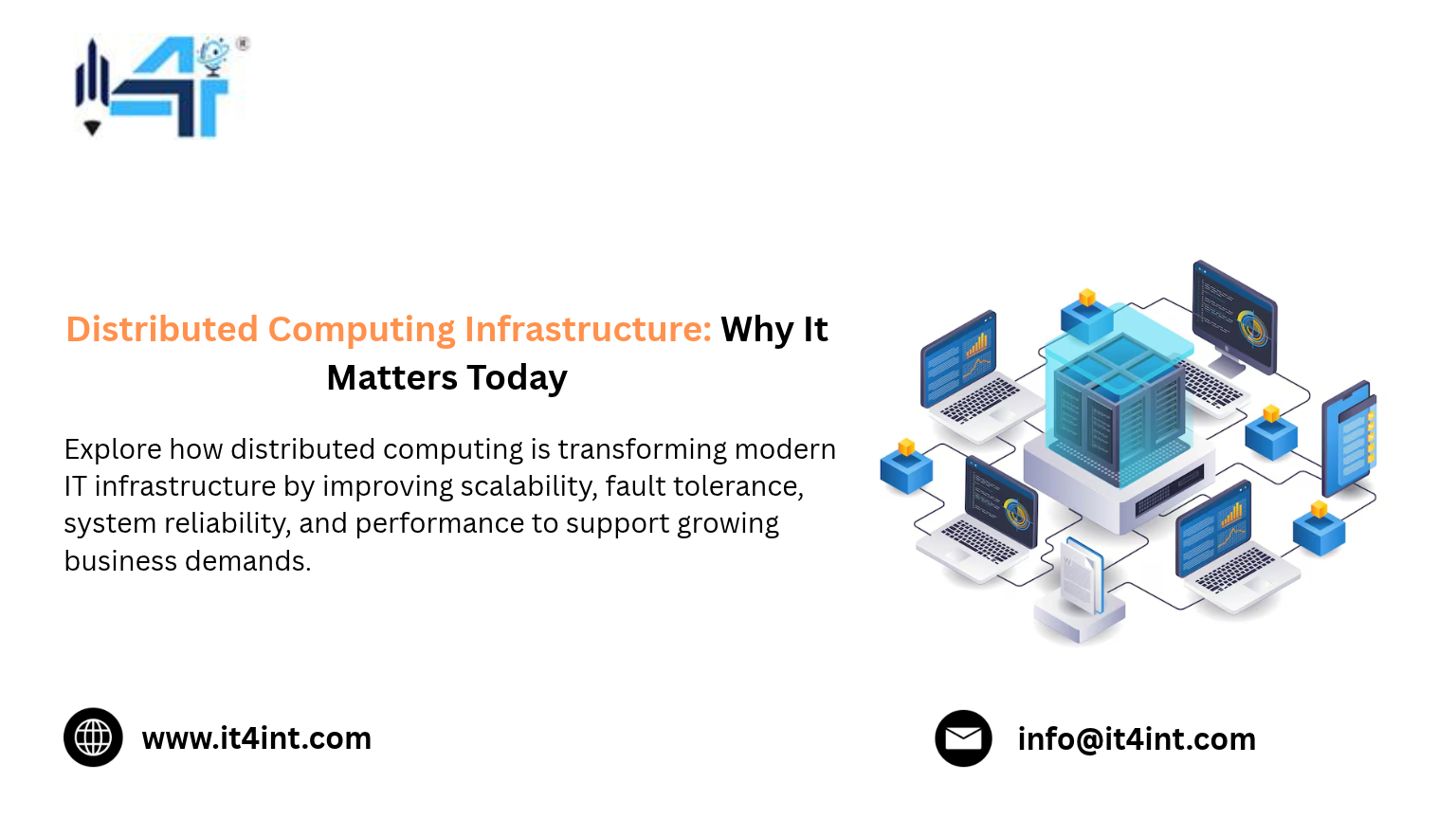
Distributed computing infrastructure refers to a network of interconnected computers, servers, storage systems, and other computing resources that work together to perform tasks and manage workloads. Instead of depending on a single machine, the system distributes processing activities across multiple nodes that communicate and coordinate with one another.
Each node can perform specific computing tasks while contributing to the overall performance of the system. These nodes may operate within the same data center, across multiple geographical locations, or through cloud-based environments.
For example, an e-commerce platform may use separate servers for website hosting, payment processing, inventory management, customer databases, and analytics. Although these components operate independently, they work together to deliver a seamless customer experience. A well-designed distributed computing infrastructure helps organizations manage growing workloads without relying entirely on a single computing resource.
Dedicated Server Plans
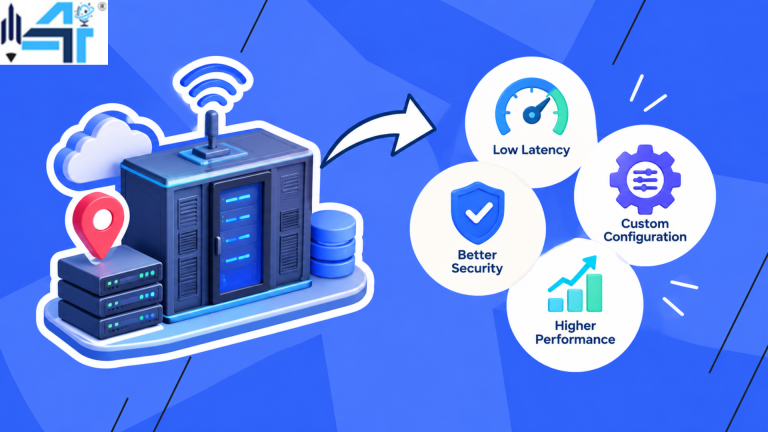
Power your growing business with IT4INT reliable infrastructure built for demanding workloads, with high performance, advanced security, and flexible configurations tailored to your needs.
How Does Distributed Computing Work?
Distributed computing works by dividing large computing tasks into smaller workloads and assigning them to different machines within a network.
The process generally involves:
- Task Distribution: Large workloads are divided into smaller tasks that can be processed independently.
- Resource Allocation: Computing resources are assigned to different nodes based on workload requirements.
- Communication: Nodes exchange information through network connections and communication protocols.
- Coordination: Distributed software manages task execution, synchronization, and resource availability.
- Data Management: Information is stored, replicated, or distributed across multiple systems.
- Result Integration: Individual processing results are combined to complete the overall operation.
This coordinated approach allows organizations to handle complex workloads more efficiently while maintaining flexibility and availability.
Why Distributed Computing Is Becoming Critical Infrastructure
The increasing dependence on digital services has changed how organizations approach their IT infrastructure. Businesses now require systems that remain available, perform consistently, and adapt quickly to changing workloads.
Distributed computing addresses these requirements through a decentralized architecture that supports operational continuity and long-term growth.
Here are the major reasons why it is becoming critical infrastructure.
1. Growing Demand for Continuous Availability
Modern businesses cannot afford extended system downtime. Online stores, financial platforms, healthcare systems, and enterprise applications often operate around the clock.
A centralized computing environment can become a single point of failure if critical workloads depend on one server or location. Hardware failures, network interruptions, or maintenance activities may affect the entire service.
Distributed computing reduces this dependency by spreading workloads across multiple nodes.
If one server becomes unavailable, other servers can continue handling certain workloads, provided the application is designed with appropriate redundancy and failover mechanisms.
This capability is particularly valuable for organizations operating customer-facing applications and business-critical services.
Continuous availability is therefore one of the main reasons distributed computing infrastructure is becoming a fundamental requirement for modern enterprises.
2. Better Fault Tolerance and Reliability
Reliability is essential for any organization that depends on technology to deliver services. Fault tolerance refers to a system’s ability to continue operating, potentially with reduced functionality, when one or more components experience failure.
Distributed systems improve fault tolerance by avoiding complete dependence on a single computing resource.
For example, a company may distribute its application workloads across three servers. If one server fails, the remaining servers can continue processing requests while the failed component is repaired or replaced.
Common fault-tolerance techniques include:
- Data replication across multiple servers.
- Automated failover mechanisms.
- Redundant network connections.
- Load balancing between computing nodes.
- Backup and disaster recovery systems.
- Continuous system monitoring.
These mechanisms help reduce service interruptions and improve operational resilience.
However, fault tolerance does not happen automatically simply because a system is distributed. It requires proper architecture, redundancy planning, data consistency management, and regular testing.
For businesses operating essential digital services, investing in reliable distributed systems can significantly strengthen infrastructure resilience.
3. Horizontal Scaling Supports Business Growth
One of the most important distributed computing benefits is horizontal scaling.
Horizontal scaling, also known as scaling out, involves increasing computing capacity by adding more servers or nodes to an existing system.
Traditional vertical scaling typically requires upgrading an existing server with additional memory, processing power, or storage. Although useful, this approach eventually reaches hardware and cost limitations.
Horizontal scaling provides an alternative.
For example, when an online business experiences increasing website traffic, it can add more application servers to distribute incoming requests. This allows the infrastructure to accommodate additional users without depending entirely on a single high-capacity machine.
The advantages of horizontal scaling include:
- Greater flexibility when expanding computing capacity.
- Improved workload distribution.
- Reduced dependency on individual servers.
- Better support for fluctuating traffic.
- Easier infrastructure expansion.
- Improved resource utilization when properly configured.
As organizations grow, horizontal scaling makes it easier to expand IT capacity according to actual business requirements.
This is particularly important for cloud platforms, SaaS providers, large websites, and data-intensive applications.
4. Increasing Data Processing Requirements
Businesses generate enormous amounts of information through customer interactions, online transactions, connected devices, business applications, and digital platforms.
Processing this information efficiently requires substantial computing resources.
A single server may struggle to handle large-scale data processing workloads, especially when multiple applications and users access resources simultaneously.
Distributed computing makes it possible to divide data processing tasks among several machines.
For example, organizations can distribute analytics workloads across multiple processing nodes, allowing different sections of a large dataset to be processed simultaneously.
This approach supports applications such as:
- Big data analytics.
- Artificial intelligence and machine learning.
- Real-time monitoring.
- Financial transaction processing.
- Business intelligence platforms.
- Internet of Things (IoT) applications.
As data volumes continue to increase, distributed computing infrastructure provides a scalable foundation for processing and managing complex information.
5. Reduced Dependency on Centralized Infrastructure
Centralized computing environments can create operational risks when essential applications depend on a single data center, server, or network connection.
A major hardware failure, connectivity problem, or localized outage may affect multiple business operations.
Distributed computing reduces this concentration of risk by allowing workloads and resources to operate across different systems and locations.
For instance, an organization may distribute its application infrastructure between multiple data centers or cloud regions. If one location experiences an outage, services can potentially continue through another location.
This architecture supports greater infrastructure independence and operational flexibility.
It also enables businesses to design IT environments that better accommodate geographical requirements, regulatory considerations, and disaster recovery strategies.
Major Distributed Computing Benefits for Modern Businesses
Beyond performance and availability, distributed computing offers several business advantages that make it increasingly valuable for organizations of different sizes.
1. Improved Performance Through Parallel Processing
Distributed computing allows multiple systems to work on different parts of a workload simultaneously.
This process, known as parallel processing, can reduce the time required to complete computationally intensive tasks.
For example, scientific research, financial modeling, large-scale analytics, and machine learning applications can benefit from distributing processing activities across multiple computing nodes.
By utilizing available resources more effectively, organizations can improve application responsiveness and overall computing efficiency.
2. Greater Infrastructure Flexibility
Business requirements are constantly changing. Seasonal traffic, new product launches, customer growth, and application upgrades can create unpredictable computing demands.
Distributed systems allow organizations to add, remove, or reconfigure computing resources according to operational needs.
This flexibility helps businesses avoid depending on fixed infrastructure capacity.
Organizations can also combine on-premises servers, private cloud environments, and public cloud services to create hybrid computing architectures.
3. Better Resource Utilization
In traditional computing environments, certain servers may remain underutilized while others experience heavy workloads.
Distributed computing can help balance these demands through intelligent workload allocation and load balancing.
By distributing processing requests across available resources, businesses can reduce bottlenecks and improve infrastructure efficiency.
Effective resource utilization can also contribute to better long-term infrastructure planning.
4. Improved Business Continuity
Business continuity involves maintaining essential operations during unexpected disruptions.
Distributed infrastructure supports business continuity through redundant systems, data replication, backup environments, and geographically separated resources.
These capabilities help organizations recover from hardware failures, network interruptions, and certain infrastructure-related incidents.
For businesses where downtime directly affects revenue, productivity, or customer trust, business continuity is a major consideration.
5. Support for Modern Cloud Technologies
Cloud computing and distributed computing are closely connected.
Most large-scale cloud platforms use distributed architecture to deliver computing, networking, storage, and application services.
Organizations can use distributed infrastructure to deploy applications across multiple virtual machines, containers, availability zones, and geographical regions.
This approach makes it easier to build flexible environments that support modern application development and deployment practices.
Distributed Computing and Critical Infrastructure IT
Critical infrastructure IT refers to the technology systems and digital services that support essential business operations and important public services.
Industries such as healthcare, banking, telecommunications, transportation, energy, and government increasingly depend on reliable computing infrastructure.
A disruption in these environments can have consequences beyond ordinary business inconvenience.
Distributed computing helps support these essential operations through redundancy, scalability, workload distribution, and improved resilience.
Let’s examine how different industries benefit.
Healthcare
Healthcare organizations depend on digital patient records, medical imaging, hospital management systems, diagnostic applications, and connected medical equipment.
Distributed computing can help healthcare providers manage large amounts of information while supporting access to digital services across different facilities.
With suitable security controls, backup mechanisms, and disaster recovery planning, distributed infrastructure can improve the availability of important healthcare applications.
Banking and Financial Services
Financial institutions process large volumes of transactions and require reliable systems for payments, account management, fraud detection, and financial reporting.
Distributed systems can support transaction processing across multiple computing resources while improving scalability and resilience.
They also help financial organizations accommodate growing digital banking demands.
Telecommunications
Telecommunications companies manage extensive networks, customer services, data traffic, and communication infrastructure.
Distributed computing enables service providers to process workloads across geographically distributed locations.
This architecture is especially useful for supporting edge computing, network management, and low-latency digital services.
E-Commerce and Retail
Online retailers experience changing traffic levels depending on promotions, holidays, product launches, and seasonal shopping patterns.
Distributed infrastructure allows e-commerce businesses to scale application servers, distribute customer requests, and support inventory and payment systems.
It helps businesses maintain a consistent shopping experience during periods of high demand.
Manufacturing and Industrial Operations
Modern manufacturing increasingly depends on connected machinery, industrial sensors, automated systems, and real-time production monitoring.
Distributed computing supports the processing of data generated by industrial equipment and connected devices.
It also works alongside edge computing to reduce the need to send every piece of operational data to a centralized location.
The Role of Distributed Computing in Cloud and Edge Computing
Cloud computing and edge computing are two important technologies driving the adoption of distributed infrastructure.
Distributed Computing in Cloud Environments
Cloud platforms rely on distributed resources to deliver services at scale.
Instead of running workloads on a single physical machine, cloud environments can distribute applications across multiple virtual servers, storage systems, and geographical regions.
This architecture supports:
- Flexible computing capacity.
- Automated workload management.
- Application availability.
- Data replication.
- Containerized deployments.
- Cloud-native application development.
Organizations can use cloud-based distributed systems to support business applications without managing every underlying hardware component themselves.
Distributed Computing in Edge Environments
Edge computing brings processing resources closer to the location where data is generated or consumed.
This is particularly important for applications that require fast response times, such as industrial automation, connected vehicles, smart cities, and real-time monitoring.
Rather than sending all data to a centralized cloud environment, edge devices and local computing nodes can process information closer to the source.
Distributed computing provides the architectural foundation for coordinating these geographically dispersed resources.
Together, cloud and edge computing help organizations build more responsive and flexible digital infrastructure.
Challenges Businesses Must Consider When Implementing Distributed Systems
Although distributed computing offers significant advantages, implementing it requires careful planning.
Organizations must understand the technical challenges associated with managing multiple interconnected systems.
1. Network Complexity
Distributed systems rely on communication between different nodes. Network latency, bandwidth limitations, and connectivity failures can affect performance.
Businesses must design reliable network architecture and optimize communication between components.
2. Data Consistency
When information is distributed across multiple servers, maintaining consistent data can become challenging.
Organizations need appropriate data replication strategies, synchronization mechanisms, and consistency models.
The correct approach depends on application requirements and the acceptable trade-offs between consistency, availability, and performance.
3. Security Management
Every additional server, connection, and application component introduces potential security considerations.
Organizations should implement:
- Strong identity and access management.
- Data encryption in transit and at rest.
- Network segmentation.
- Regular security updates.
- Continuous monitoring.
- Centralized logging and auditing.
Security must be integrated into the architecture rather than treated as an afterthought.
4. Infrastructure Monitoring
Monitoring a distributed environment is more complex than monitoring a single server.
IT teams need visibility into server performance, application health, network activity, resource utilization, and system failures.
Centralized monitoring and automated alerting can help administrators identify problems before they significantly affect business operations.
5. Management and Operational Costs
Distributed infrastructure may require additional investment in hardware, networking, software licensing, security, and technical expertise.
Businesses should evaluate their workloads and infrastructure requirements before selecting an architecture.
A carefully planned implementation can help balance performance, operational complexity, and long-term costs.
Best Practices for Building Reliable Distributed Computing Infrastructure
Organizations looking to adopt distributed computing should follow a structured approach to achieve reliability, performance, and scalability.
1. Design for Failure: Assume that individual components may fail. Build redundancy, automated recovery, and failover mechanisms into the architecture.
2. Implement Horizontal Scaling: Use scalable application architecture that allows additional nodes to be introduced when workloads increase.
3. Use Load Balancing: Distribute incoming requests across available servers to reduce bottlenecks and prevent individual systems from becoming overloaded.
4. Establish Data Replication Strategies: Maintain appropriate copies of important information across suitable storage systems or locations.
5. Prioritize Cybersecurity: Apply access controls, encryption, network security, vulnerability management, and regular audits.
6. Monitor Infrastructure Continuously: Track system health, application performance, resource consumption, and network availability.
7. Test Disaster Recovery Plans: Regularly verify backup restoration, failover processes, and recovery procedures.
8. Choose Scalable Infrastructure Partners: Work with experienced technology providers that understand server performance, infrastructure reliability, and changing business requirements.
These practices help organizations create distributed systems that can support essential digital operations over the long term.
Why Businesses Should Invest in Distributed Computing Now
The transition toward distributed computing is not simply a response to increasing data volumes. It reflects a broader change in how businesses design, operate, and protect their digital environments.
Organizations are increasingly expected to deliver uninterrupted services, respond to customer demands quickly, manage complex workloads, and adapt to emerging technologies.
Traditional infrastructure models may not provide the flexibility required to meet these expectations.
Investing in distributed computing infrastructure helps businesses prepare for future growth by providing a foundation for scalable applications, resilient services, and efficient resource management.
It also supports the adoption of emerging technologies, including artificial intelligence, cloud-native applications, automation, edge computing, and large-scale data analytics.
For businesses planning their next phase of digital transformation, distributed computing should be considered an important part of long-term IT infrastructure strategy.
How IT4INT Server Supports Modern IT Infrastructure Requirements
As businesses become more dependent on digital services, selecting the right infrastructure and technology partner becomes increasingly important.
IT4INT Server recognizes the importance of reliable server infrastructure, scalable computing resources, and technology environments that support modern business operations.
Whether organizations are planning infrastructure upgrades, expanding server capacity, or evaluating more flexible computing architectures, choosing solutions that align with performance, availability, and scalability requirements is essential.
A forward-looking infrastructure strategy should focus on:
- Reliable server environments for business-critical applications.
- Scalable computing resources that accommodate growing workloads.
- Infrastructure planning that supports horizontal scaling.
- Backup and recovery strategies for business continuity.
- Security-focused infrastructure management.
- Performance optimization for demanding applications.
Distributed computing represents an important direction for modern IT infrastructure. Businesses that understand its capabilities can make more informed technology decisions and build environments that are better prepared for changing operational demands.
At IT4INT Server, the focus is on helping businesses understand the infrastructure requirements behind reliable and scalable digital operations.
As computing requirements continue to evolve, building a strong infrastructure foundation is an investment in long-term business resilience.
Read More: SAP HANA Hosting: How to Size Infrastructure Without Overpaying
Conclusion
Distributed computing is rapidly becoming a critical part of modern digital infrastructure because businesses require more than basic computing capacity. They need systems that can scale with demand, remain available during disruptions, process growing volumes of data, and support increasingly complex applications.
By distributing workloads across interconnected resources, organizations can achieve important distributed computing benefits, including fault tolerance, horizontal scaling, improved performance, and greater operational flexibility.
From healthcare and financial services to telecommunications, e-commerce, and manufacturing, distributed systems are supporting the digital services that modern organizations depend on every day.
However, successful implementation requires thoughtful architecture, strong security practices, effective monitoring, and reliable infrastructure management.
As businesses continue their digital transformation journeys, distributed computing infrastructure will play an increasingly important role in building resilient, scalable, and future-ready IT environments.
Connect with IT4INT Server to explore infrastructure solutions and plan a computing environment that supports your business’s evolving technology needs.