Introduction
The growing demand for real-time data processing, faster connectivity, and reliable digital services is transforming how businesses manage their IT infrastructure. From smart manufacturing and connected healthcare to retail automation, telecommunications, and the Internet of Things (IoT), organisations increasingly require computing resources closer to where data is generated. This shift has accelerated the adoption of edge data centres, which help reduce latency, improve application performance, and support distributed computing environments.
However, not every business has the same infrastructure requirements. A manufacturing facility operating industrial sensors has different computing needs from a retail chain managing point-of-sale systems or a telecom operator supporting high-density network traffic. Standardised infrastructure may not always accommodate these differences efficiently.
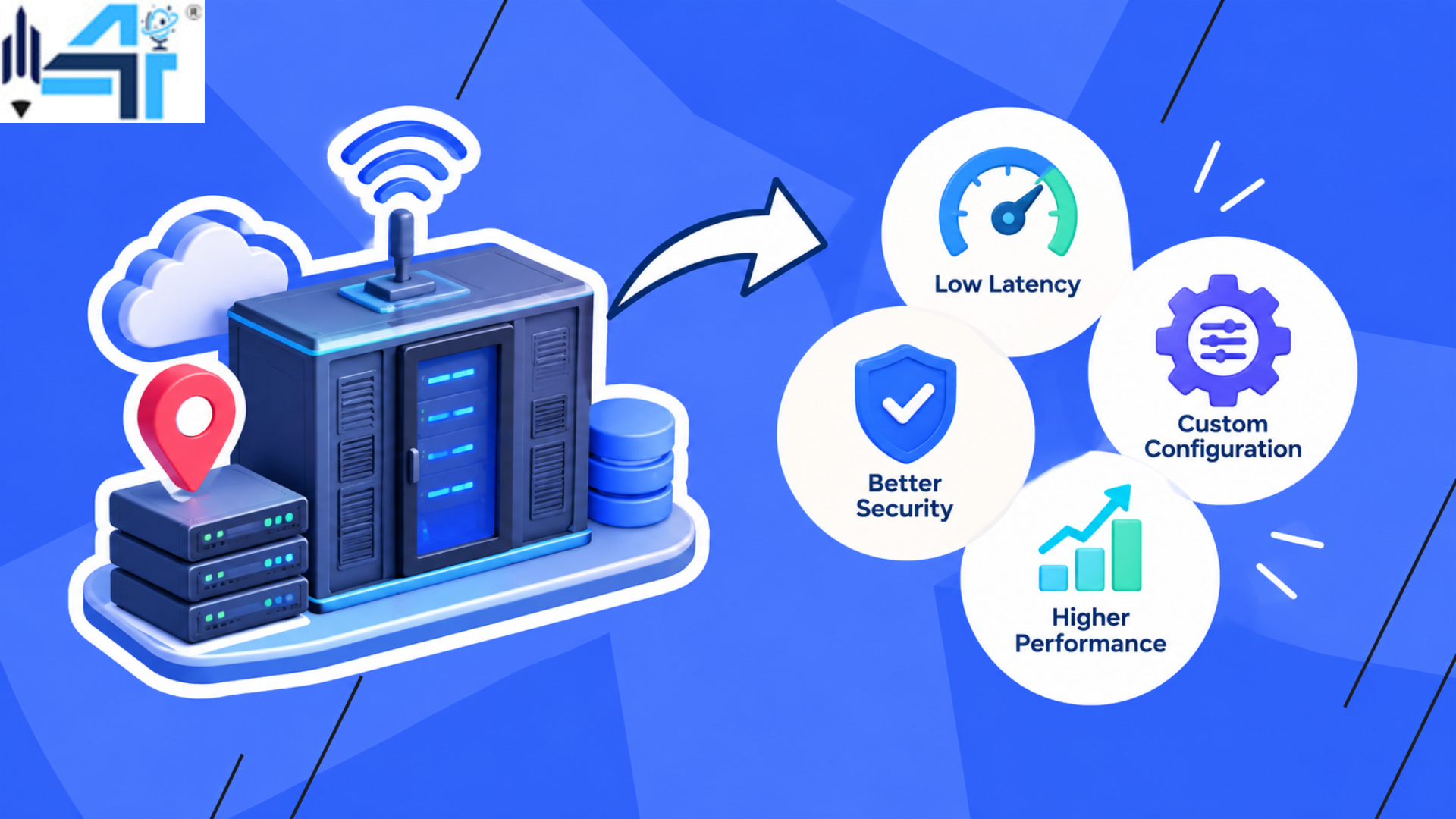
This is where customised edge data center infrastructure becomes essential. By aligning computing capacity, power distribution, cooling systems, connectivity, physical security, and scalability with specific operational requirements, businesses can build edge environments that deliver better performance and long-term value.
In this blog, we explore why customised infrastructure matters in edge data centres, its key benefits, the technologies involved, and how businesses can develop an edge environment that supports their evolving digital needs.
What Is Edge Data Centre Infrastructure?
Edge data centre infrastructure refers to the combination of hardware, networking, power, cooling, security, and management systems used to process and store data close to its source. Unlike traditional centralised data centres, edge facilities are positioned near end users, connected devices, industrial equipment, or business operations.
This proximity reduces the distance data must travel between devices and computing resources. As a result, applications can respond faster, bandwidth usage can be optimised, and organisations can make time-sensitive decisions more efficiently.
A typical edge data centre may include:
- Computing hardware: Servers, processors, accelerators, and storage systems for local data processing.
- Networking equipment: Routers, switches, gateways, and connectivity solutions that facilitate secure data transmission.
- Power infrastructure: Uninterruptible power supplies (UPS), power distribution units, and backup power arrangements.
- Cooling systems: Air-based or liquid-based cooling solutions designed for the installed equipment and operating conditions.
- Physical security: Access controls, surveillance, and environmental monitoring.
- Remote management tools: Systems for monitoring performance, detecting faults, and managing distributed locations.
The exact configuration depends on the workload, site conditions, available space, environmental constraints, and business objectives. Consequently, effective edge data center design must account for more than simply installing servers in a smaller facility.
Dedicated Server Plans
Power your growing business with IT4INT reliable infrastructure built for demanding workloads, with high performance, advanced security, and flexible configurations tailored to your needs.
Why Does Customised Infrastructure Matter in Edge Data Centres?
1. It Delivers Application-Specific Performance
Different applications place different demands on computing infrastructure. Artificial intelligence workloads may require specialised accelerators and high-performance processors, while industrial automation systems prioritise predictable response times and uninterrupted operation. Video analytics applications may need substantial processing power and storage, whereas branch offices may require compact systems for local business applications.
A standard infrastructure configuration may provide more capacity than necessary in some areas while failing to meet critical requirements in others.
Custom edge infrastructure addresses this challenge by matching hardware specifications, network architecture, storage capacity, and processing resources to the intended workload. Businesses can select appropriate server configurations, memory capacity, storage technologies, and networking components instead of relying on a one-size-fits-all solution.
This approach improves resource utilisation and helps ensure that applications receive the computing capacity they need. It also reduces the likelihood of investing in unnecessary equipment or deploying systems that become performance bottlenecks as workloads increase.
2. It Reduces Latency and Improves Real-Time Processing
Low latency is one of the most important reasons organisations deploy edge computing solutions. Applications such as autonomous systems, industrial robotics, remote monitoring, and real-time video analytics cannot always depend on distant cloud infrastructure for every processing task.
When data must travel to a central data centre and back, network distance, congestion, and routing delays can affect response times. Processing selected workloads locally can reduce these delays.
A well-planned low latency infrastructure combines appropriately positioned computing resources with efficient networking, suitable storage, and optimised application placement. It also considers the communication paths between connected devices, local servers, and central cloud platforms.
For example, a manufacturing facility using machine vision to identify defects on an assembly line may need to analyse images immediately. Deploying suitable processing hardware close to the production equipment allows the system to make decisions without sending every image to a remote location.
The actual latency improvement depends on network conditions, workload design, and the application architecture. Nevertheless, customised infrastructure makes it easier to align technical decisions with strict response-time requirements.
3. It Optimises Power Consumption and Cooling
Power availability and heat dissipation are major considerations when deploying computing equipment outside conventional data centre environments. Edge facilities may operate in warehouses, factories, retail locations, telecom sites, or remote industrial areas where space and utilities are limited.
Using infrastructure designed for a large, centralised facility may not be practical for these locations.
Customised infrastructure allows organisations to size power distribution, UPS capacity, cooling systems, and equipment layouts according to the actual computing load and site conditions. High-density workloads can be accommodated with appropriate airflow management or liquid cooling where justified, while lower-density deployments may use simpler cooling arrangements.
Energy-efficient servers, intelligent power monitoring, and workload consolidation can further improve operational efficiency.
Importantly, cooling and power systems should be designed with appropriate safety margins and realistic growth assumptions. Undersized systems can lead to overheating or service interruptions, while excessive oversizing can increase initial costs and reduce efficiency at low utilisation.
A tailored approach helps businesses balance reliability, energy consumption, available space, and operating expenditure.
4. It Supports Scalability and Future Growth
Business requirements rarely remain constant. An organisation may begin with a small edge deployment and later expand its operations, introduce AI-driven applications, connect more devices, or increase local data retention requirements.
Infrastructure that cannot accommodate these changes may require expensive redesigns, equipment replacement, or service disruptions.
A scalable edge data centre design anticipates future requirements without committing the organisation to unnecessary capacity from the beginning. This can involve modular racks, expandable storage, additional network capacity, standardised deployment units, and provisions for future power and cooling requirements.
For example, a retailer may initially deploy edge servers to support local transactions and inventory management. As the business introduces in-store analytics and computer vision, it can add suitable processing resources if the original architecture has been designed for expansion.
Scalability should also extend to software management, security policies, and remote monitoring. A deployment that is physically expandable but difficult to manage across multiple locations may create operational complexity as it grows.
Customised infrastructure therefore provides a foundation for controlled expansion while helping organisations manage investment over time.
5. It Improves Reliability and Business Continuity
Edge data centres frequently support services that must remain available even when connectivity to a central cloud or corporate data centre is interrupted. Examples include industrial control support systems, local transaction processing, telecommunications infrastructure, and critical monitoring applications.
Customisation allows reliability measures to reflect the consequences of downtime and the operating conditions of each location.
Depending on business requirements, these measures may include redundant power supplies, UPS systems, backup generators where appropriate, redundant network paths, environmental sensors, and local data protection mechanisms. Critical applications may also require failover arrangements and carefully tested recovery procedures.
Not every deployment needs the same level of redundancy. A small office supporting non-critical workloads may have different availability requirements from an industrial site where downtime affects production.
By defining recovery objectives and availability targets before deployment, organisations can invest in the resilience features that matter most.
It is equally important to recognise that hardware redundancy alone does not guarantee business continuity. Software failures, configuration errors, cyberattacks, and upstream network outages must also be addressed through operational processes, monitoring, and disaster recovery planning.
6. It Strengthens Physical and Cybersecurity
Edge infrastructure often operates across multiple locations with varying levels of physical security. Some installations are placed in controlled technical rooms, while others may be located in public-facing premises, remote facilities, or industrial environments.
This distributed footprint creates challenges for both physical protection and cybersecurity.
A customised security architecture can include locked enclosures, role-based access controls, secure boot capabilities, hardware-based security features, encrypted communications, network segmentation, and centralised monitoring. Equipment selection should also consider firmware management, vendor support, and security update availability.
For organisations operating numerous edge sites, consistent security policies are particularly important. Each location should follow defined procedures for device provisioning, administrator access, patching, incident response, and secure decommissioning.
Environmental monitoring can also improve protection by identifying unusual temperatures, humidity levels, power fluctuations, or unauthorised access attempts.
Customisation enables security controls to match the risk profile of the deployment rather than relying on generic configurations. This is especially valuable in sectors that process sensitive customer information, operational technology data, or regulated business records.
7. It Makes Better Use of Space and Site Conditions
Unlike large data centres, edge facilities are often deployed in locations that were not originally designed to accommodate IT infrastructure. Available space may be restricted, ambient temperatures may vary, and dust, vibration, humidity, or limited maintenance access may affect equipment selection.
A customised design accounts for these practical constraints from the beginning.
Depending on the application, businesses may require compact racks, wall-mounted enclosures, sealed cabinets, industrial-grade hardware, enhanced filtration, or specialised environmental controls. Remote locations may also need designs that simplify servicing and reduce dependence on on-site technical personnel.
A micro data centre can be a suitable option when computing, storage, power protection, and cooling need to be integrated into a compact, self-contained deployment. However, its suitability depends on the required capacity, environmental conditions, and maintenance strategy.
By considering the installation environment alongside technical specifications, organisations can reduce deployment complications and improve long-term operational reliability.
8. It Helps Control Total Cost of Ownership
Customised infrastructure is not necessarily the cheapest option at the initial purchasing stage. Its value comes from balancing upfront investment with the cost of operating, maintaining, and expanding the deployment over its useful life.
A carefully designed edge environment can reduce unnecessary hardware purchases, avoid oversized cooling systems, improve resource utilisation, and simplify maintenance across distributed sites.
Local processing may also reduce the volume of data transmitted to central platforms when applications can filter, aggregate, or analyse information at the edge. This can help control network bandwidth requirements and associated costs, although the savings depend on data volumes, connectivity pricing, and application behaviour.
Businesses should evaluate total cost of ownership (TCO) across equipment, installation, power, cooling, connectivity, software licences, support, security, and future upgrades.
A customised solution is most effective when these costs are evaluated together rather than optimising a single component in isolation.
Key Components of a Custom Edge Data Centre Infrastructure
Building an effective edge environment requires coordination between several infrastructure layers.
Computing and Storage Hardware
The selection of edge computing hardware should reflect workload requirements, available space, performance expectations, and environmental conditions. Organisations may need compact servers, GPU-enabled systems, high-speed storage, or ruggedised equipment for demanding industrial settings.
Storage capacity should account for retention policies, local analytics, backup requirements, and the amount of data that must remain available during network interruptions.
Networking and Connectivity
Reliable connectivity is essential for communication between edge devices, local applications, and central platforms. Depending on the deployment, the network may include Ethernet, fibre, Wi-Fi, private cellular networks, or other supported connectivity technologies.
Network design should address bandwidth, redundancy, segmentation, traffic prioritisation, and secure communication with cloud services. For latency-sensitive applications, unnecessary network hops and inefficient routing should be avoided where possible.
Power and Environmental Management
Power infrastructure must accommodate expected loads, startup conditions, redundancy requirements, and future expansion. UPS systems help maintain continuity during short interruptions, while longer outages may require additional backup arrangements.
Cooling capacity should be calculated against equipment heat output and expected environmental conditions. Temperature, humidity, airflow, and power consumption should be monitored to support proactive maintenance.
Monitoring and Remote Management
Managing many edge sites manually can become expensive and difficult. Centralised monitoring platforms allow IT teams to observe system health, identify performance issues, review environmental conditions, and coordinate maintenance across locations.
Automated alerts, remote diagnostics, configuration management, and standardised deployment procedures can reduce the need for routine on-site intervention.
These capabilities are particularly valuable when sites are geographically dispersed or lack dedicated technical staff.
Custom Edge Infrastructure Across Different Industries
The benefits of customised edge infrastructure become clearer when viewed through real-world applications.
Manufacturing: Production facilities can deploy local computing resources for machine vision, predictive maintenance, industrial analytics, and time-sensitive operational applications. Designs may prioritise ruggedised equipment, environmental protection, and reliable connectivity with operational technology systems.
Healthcare: Hospitals and diagnostic facilities may use edge systems to support medical imaging workflows, local application access, device connectivity, and time-sensitive data processing. Infrastructure must be designed around availability, access controls, privacy, and applicable regulatory requirements.
Retail: Retailers can use edge computing to support point-of-sale systems, inventory synchronisation, video analytics, and store-level applications. Compact deployments and remote management help maintain consistency across multiple branches.
Telecommunications: Telecom operators may require distributed computing capacity to support network functions, content delivery, and low-latency services. These deployments can place particular demands on network performance, power efficiency, and scalable hardware.
Smart cities and transportation: Connected infrastructure may rely on local processing for traffic monitoring, video analysis, environmental sensing, and other applications. Deployment conditions and response-time requirements vary significantly between locations.
These examples demonstrate why a standard configuration may not be appropriate for every environment. The right design depends on the operational purpose, workload characteristics, and site-specific constraints.
How to Choose the Right Edge Data Centre Design
Selecting the right architecture requires a structured assessment of business and technical needs.
1. Identify workloads and performance targets. Determine which applications will run locally, how much computing capacity they need, and what latency, availability, and storage requirements apply.
2. Assess the deployment environment. Evaluate available space, power supply, cooling options, ambient conditions, connectivity, physical access, and maintenance constraints.
3. Define security and resilience requirements. Establish access controls, data protection measures, redundancy levels, backup policies, and recovery objectives based on business risk.
4. Plan for expansion. Estimate likely increases in data volumes, connected devices, processing requirements, and storage capacity. Build in practical upgrade paths.
5. Evaluate lifecycle costs. Compare the cost of equipment, energy, connectivity, installation, management, and support over the expected operating life.
6. Standardise where possible. Customisation does not mean every site must use a completely different architecture. Standardised building blocks with site-specific configurations can simplify procurement, maintenance, and deployment at scale.
7. Validate the design before rollout. Test representative workloads, thermal performance, failover behaviour, remote management, and security controls before deploying the architecture across multiple locations.
This process helps businesses create infrastructure that addresses immediate requirements while remaining adaptable to future changes.
Read More: Email Hosting vs. Google Workspace: Where Your Business Email Should Actually Live
Common Challenges and How to Overcome Them
Although customised infrastructure offers significant advantages, successful deployment requires careful planning.
One challenge is managing complexity across distributed locations. Different hardware configurations can increase maintenance effort and make troubleshooting more difficult. Organisations can reduce this risk by adopting standardised designs, consistent monitoring tools, and documented configuration baselines.
Another challenge is balancing performance with cost. High-performance servers, advanced cooling, and extensive redundancy may be justified for critical applications but unnecessary for simpler workloads. Capacity planning and workload assessment help prevent overspending.
Remote maintenance is another consideration. Locations with limited technical support may require easily replaceable components, remote diagnostics, and clear escalation procedures.
Finally, security must remain consistent throughout the infrastructure lifecycle. Secure provisioning, regular updates, access reviews, vulnerability management, and end-of-life planning should be incorporated into deployment processes from the outset.
Addressing these challenges early makes edge deployments easier to operate, secure, and scale.
The Future of Edge Data Centre Infrastructure
The evolution of artificial intelligence, industrial IoT, connected vehicles, smart infrastructure, and real-time analytics is increasing the range of workloads processed closer to the source of data.
As these applications grow, edge infrastructure is likely to become more diverse. Some deployments will need high-density computing and specialised accelerators, while others will prioritise energy efficiency, compact form factors, ruggedised equipment, or autonomous remote management.
AI-assisted monitoring and predictive maintenance may help operators identify emerging issues before they cause service disruptions. Modular architectures can also make it easier to deploy capacity incrementally across different locations.
At the same time, energy efficiency, cybersecurity, interoperability, and lifecycle management will remain essential considerations.
Businesses that plan for these requirements can create flexible edge environments that integrate with cloud and central data centre resources rather than operating as isolated systems.
Conclusion
Customised infrastructure plays a vital role in helping businesses get the most out of edge computing. By aligning hardware, networking, power, cooling, security, and management systems with specific workloads and site requirements, organisations can improve performance, optimise operational costs, and build more reliable IT environments.
We understand that every business has unique infrastructure needs. Whether you require a compact micro data centre for a remote location, specialised edge computing hardware for industrial applications, or scalable infrastructure to support growing operations, the right approach to edge data centre infrastructure can make a significant difference.
With a focus on performance, reliability, and future scalability, It4int Server helps businesses explore infrastructure solutions that align with their operational goals and evolving technology requirements.
As demand for real-time data processing continues to grow, investing in the right edge data center design can help your business stay efficient, responsive, and prepared for future challenges. Partner with It4int Server to explore Customised edge infrastructure solutions tailored to your business needs.